
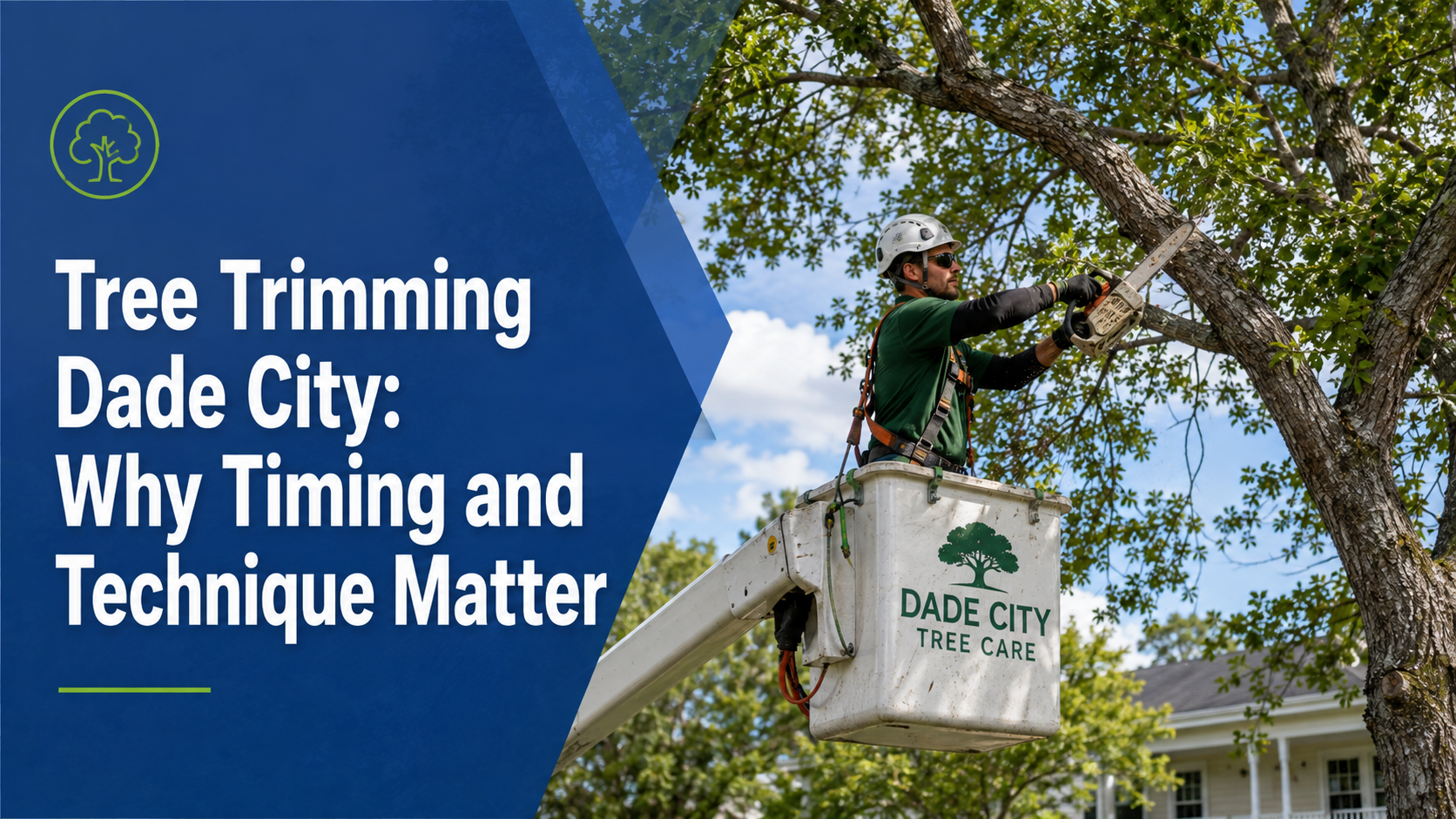
Healthy, attractive trees can add shade, beauty, privacy, and value to a property. However, trees need proper care to remain strong and safe throughout the year. One of the most important maintenance practices is trimming. Removing the wrong branches at the wrong time can create unnecessary stress, encourage disease, or weaken the tree.
Tree trimming dade city is more than shaping branches because proper timing and technique can improve safety, appearance, and long-term tree health. Professional trimming focuses on understanding how trees grow, identifying problem branches, and making careful cuts that support the tree rather than simply changing its appearance.
Why Timing Matters for Tree Trimming
Trees respond differently to pruning depending on the season, species, weather conditions, and reason for trimming. Choosing the right time can help minimize stress and encourage healthy recovery.
In many cases, trimming during a tree’s dormant period can be beneficial because the tree is not actively producing as much new growth. However, Florida’s climate means trees may have different growth patterns than trees in colder regions. Some species can be trimmed during different periods depending on their condition and location.
Timing is also important after storms. Damaged branches can become immediate hazards and may need attention regardless of the season. Dead, broken, or hanging limbs should be assessed promptly because they can fall unexpectedly and cause property damage or injury.
The Benefits of Proper Tree Trimming
Improved Tree Health
Removing dead, diseased, or damaged branches can help reduce the spread of certain problems. Strategic trimming can also improve airflow through the canopy, allowing sunlight and air to reach interior branches.
However, trimming should not involve removing excessive amounts of healthy growth. Over-pruning can stress a tree and make it more vulnerable to environmental conditions.
Better Safety
Branches growing too close to roofs, driveways, sidewalks, power lines, and other structures can create safety concerns. Weak or damaged limbs are especially dangerous during heavy rain and strong winds.
Regular inspections and professional trimming can identify these hazards before they become emergencies.
Enhanced Appearance
Well-maintained trees can make a property look cleaner and more attractive. Selective trimming can help maintain a balanced canopy and prevent excessive growth from becoming unruly.
Good pruning should preserve the tree’s natural shape rather than forcing it into an unnatural form.
Why Technique Is Just as Important
Knowing when to trim is only part of proper tree care. The way branches are removed is equally important.
Make Proper Pruning Cuts
Cuts should be made carefully to avoid unnecessary damage to the trunk or remaining branches. Cutting too close to the trunk can interfere with the tree’s natural ability to compartmentalize damage.
Likewise, leaving large stubs can create opportunities for decay and other problems. Professional tree workers understand where pruning cuts should be made based on the branch structure.
Avoid Excessive Pruning
Removing too many branches at once can reduce the tree’s ability to produce energy through photosynthesis. It can also expose previously shaded bark to intense sunlight.
A professional approach typically focuses on removing specific problem branches while preserving as much healthy canopy as possible.
Consider Branch Structure
Branches that rub against each other, cross improperly, or grow at weak angles may eventually create structural problems. Selective pruning can help improve branch spacing and reduce competition within the canopy.
The goal is not simply to remove branches. It is to improve the tree’s structure while supporting healthy future growth.
Signs Your Tree May Need Trimming
Homeowners should regularly look for signs that a tree needs professional attention. Common warning signs include:
- Dead or broken branches
- Branches rubbing against each other
- Excessive growth near structures
- Limbs hanging over roofs or driveways
- Weak or poorly positioned branches
- Storm-damaged limbs
- Branches blocking visibility
- Dense growth that restricts airflow
- Diseased or decaying branches
If a tree has large branches near electrical lines or structures, professional evaluation is especially important.
Common Tree Trimming Mistakes to Avoid
Topping the Tree
Tree topping involves cutting back major branches without considering the tree’s natural structure. This can result in weakly attached new growth and create long-term structural problems.
Removing Too Much at Once
Heavy pruning can shock a tree and leave it with insufficient foliage. Trimming should generally be selective and based on the tree’s condition.
Using Poor Cutting Techniques
Improper cuts can create unnecessary wounds and increase the risk of decay. Using dull or unsuitable equipment can also produce rough cuts that are harder for the tree to recover from.
Ignoring Safety
Tree trimming can involve ladders, chainsaws, unstable branches, and overhead hazards. Attempting to handle large or high branches without proper equipment and experience can result in serious injuries or property damage.
When to Hire a Professional
Small, reachable branches may sometimes be manageable with appropriate tools and knowledge. However, larger trees require greater caution.
Consider hiring a professional when branches are large, the tree is tall, the tree is leaning, storm damage is present, or branches are close to utility lines. A trained tree professional can evaluate the tree’s structure and determine which branches should be removed.
Professional service can also help homeowners avoid unnecessary pruning that may weaken an otherwise healthy tree.
How Often Should Trees Be Trimmed?
There is no single schedule that works for every tree. The appropriate frequency depends on the tree species, age, growth rate, location, previous pruning, and overall health.
Young trees may benefit from structural pruning as they develop. Mature trees often require less frequent but carefully planned maintenance. Trees located near buildings, roads, or utility lines may need more regular inspections because their surroundings create additional concerns.
Instead of trimming simply because a certain amount of time has passed, homeowners should evaluate the tree’s current condition and growth.
FAQs About Tree Trimming Dade City
When is the best time to trim trees in Dade City?
The best timing depends on the tree species and the reason for trimming. Local climate conditions also matter. Dead, broken, or hazardous branches may require attention regardless of the season.
Can tree trimming improve tree health?
Yes. Properly removing dead, damaged, diseased, or poorly positioned branches can improve the tree’s structure and airflow. However, excessive trimming can harm a tree, so pruning should be done carefully.
How much of a tree can be trimmed at once?
The appropriate amount varies by species, age, condition, and circumstances. Removing too much live growth can stress a tree. A professional assessment can help determine an appropriate pruning approach.
Should I trim a tree after a storm?
Storm-damaged trees should be inspected promptly. Broken or hanging branches can pose significant hazards, particularly when they are located near homes, vehicles, walkways, or utility lines.
Is tree topping recommended?
No. Topping can create weak new growth and long-term structural problems. Proper pruning should focus on selective branch removal while maintaining the tree’s natural structure.
Conclusion
Tree trimming is an important part of responsible property maintenance, but successful pruning requires more than cutting branches. Timing, technique, tree structure, species, and surrounding conditions all play important roles.
Properly planned trimming can improve safety, preserve appearance, encourage healthy growth, and reduce potential hazards. Whether a tree needs routine maintenance or has developed damaged or hazardous branches, professional evaluation can help determine the safest and most effective approach.